
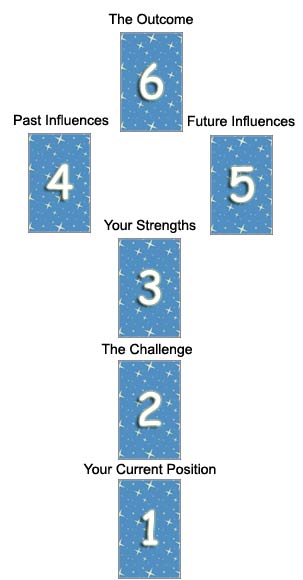
This layout forms the shape of an arrow pointing upwards, symbolic of the focus of any ambitious, career-minded individual. The first tile shows where you are currently at in your career. The second shows the challenge you will need to overcome on your way up the ladder of success. You can rely on your strengths, hinted at in Tile #3 to help you along your way. Tiles #4 and #5 show the Past and Future Influences that affect your journey. Finally, Tile #6 shows the outcome of your efforts.
The Outcome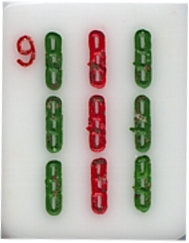 Bamboo 9 |
||
Past Related Influences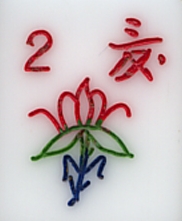 Orchid |
Future Related Influences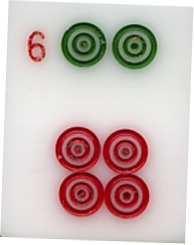 Circles 6 |
|
Your Strengths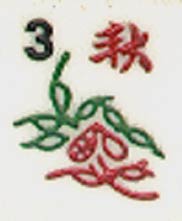 Fall |
||
The Challenges Before You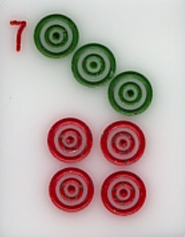 Circles 7 |
||
Your Current Position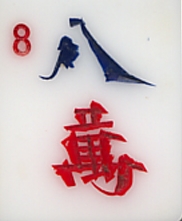 Wan 8 |
Your Current Position
The Knot tile stands for both tying and setting loose. If this tile appears in the reading with the Sword tile (2 Wan), it suggests that the time to sever your connection to someone or something has arrived. However, if the Duck tile (2 Bamboo) is in this reading, this indicates the strengthening of an existing bond.
The Insect represents gain in the short term. It suggests temporary work, small projects, and perhaps freelance. There will be short term gains, but don't rely upon this for too long. This is a transitional time when you should be planning for the future.
The harvest depends upon the effort you put in. The Farmer represents massive gains through hard work and dedication. It is a sign of self-sufficiency, abundance, and generosity.
The Orchid represents refinement, luxury, and the attainment of rare and precious things. Enjoy these times, but be careful not to give it to excess.
The Peach stands for feminine beauty, extravagance, and unfortunately indolence. It means femininity in general, and more specifically suggests that a particular woman is a factor in this reading.
The Willow stands for diplomacy and adaptability, especially regarding tough times and harsh environments. Strength and flexibility are traits of this sign, as the willow bends but will not break. This sign often foretells a need for compromise.